Red Factor Canary — Color, History, Care and Color Feeding
Red factor canary guide: red siskin ancestry, history, colors and feather types, care, color feeding during the molt and breeding considerations.

In this guide
Quick answer The red factor canary is a color canary whose red, orange and apricot shades trace back to crosses between canaries and the red siskin of South America in the early 20th century. Its color depends partly on genetics and partly on diet: new feathers grown during the molt need suitable carotenoids in the food, or the bird fades towards orange. Otherwise it needs standard canary care.
Introduction
Red factor canaries are among the most striking birds in any collection. Their color is not "painted on" by food alone — it is a combination of genetics inherited from the red siskin and the pigments the bird eats while its feathers grow.
Origin
The red factor was developed by crossing domestic canaries with the red siskin (Spinus cucullatus), a small red finch from northern South America. Hybrid offspring carried the ability to deposit red pigments, and further breeding back to canaries fixed this in the canary.
History
The red siskin crosses began in the early 20th century, with much of the pioneering work done in Germany. The work is closely associated with early studies of canary genetics. Today red factor canaries are bred worldwide. The red siskin itself is now endangered in the wild, and trapping wild birds is illegal in many places — modern red factor canaries come from established captive lines.
Appearance
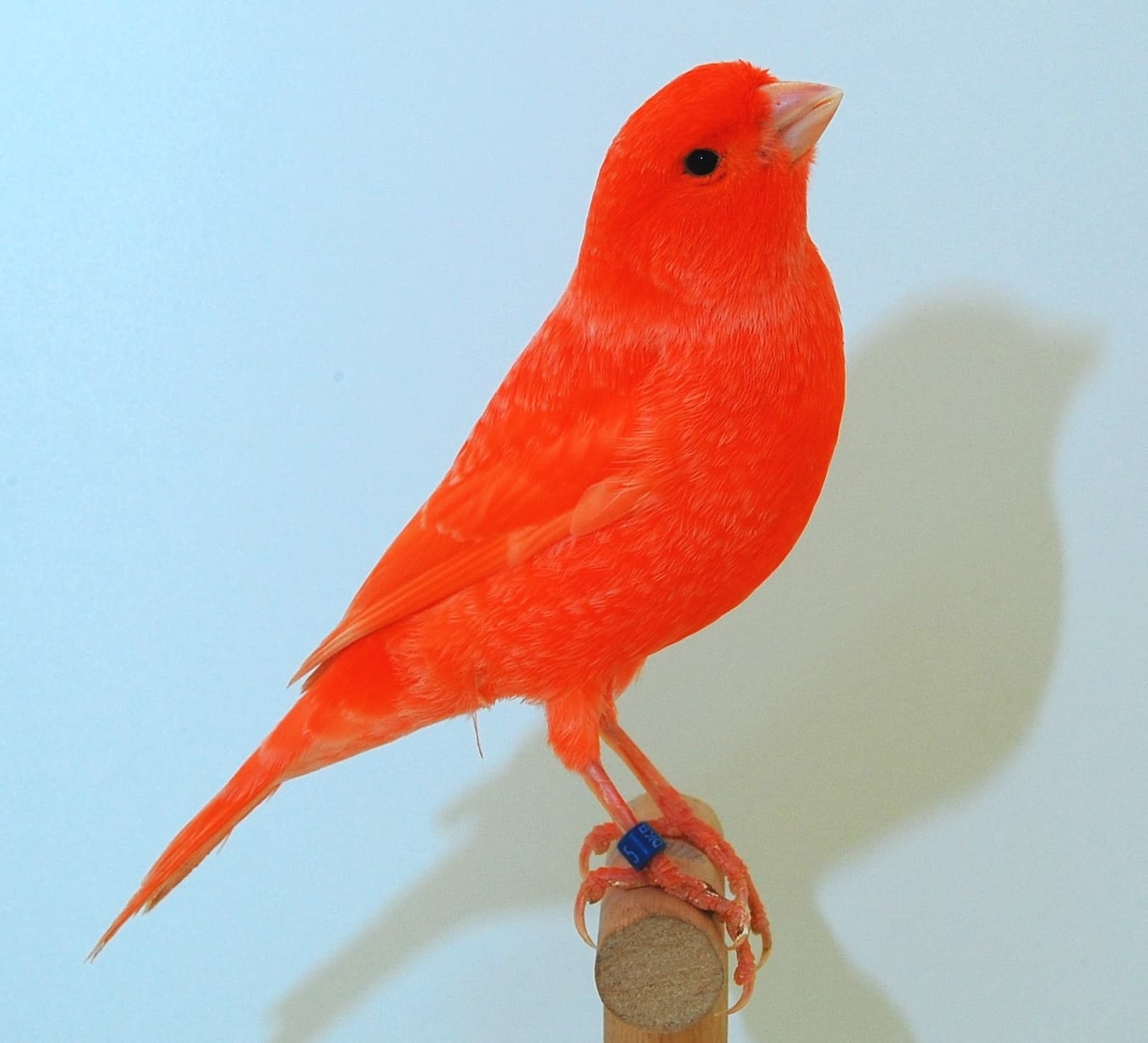
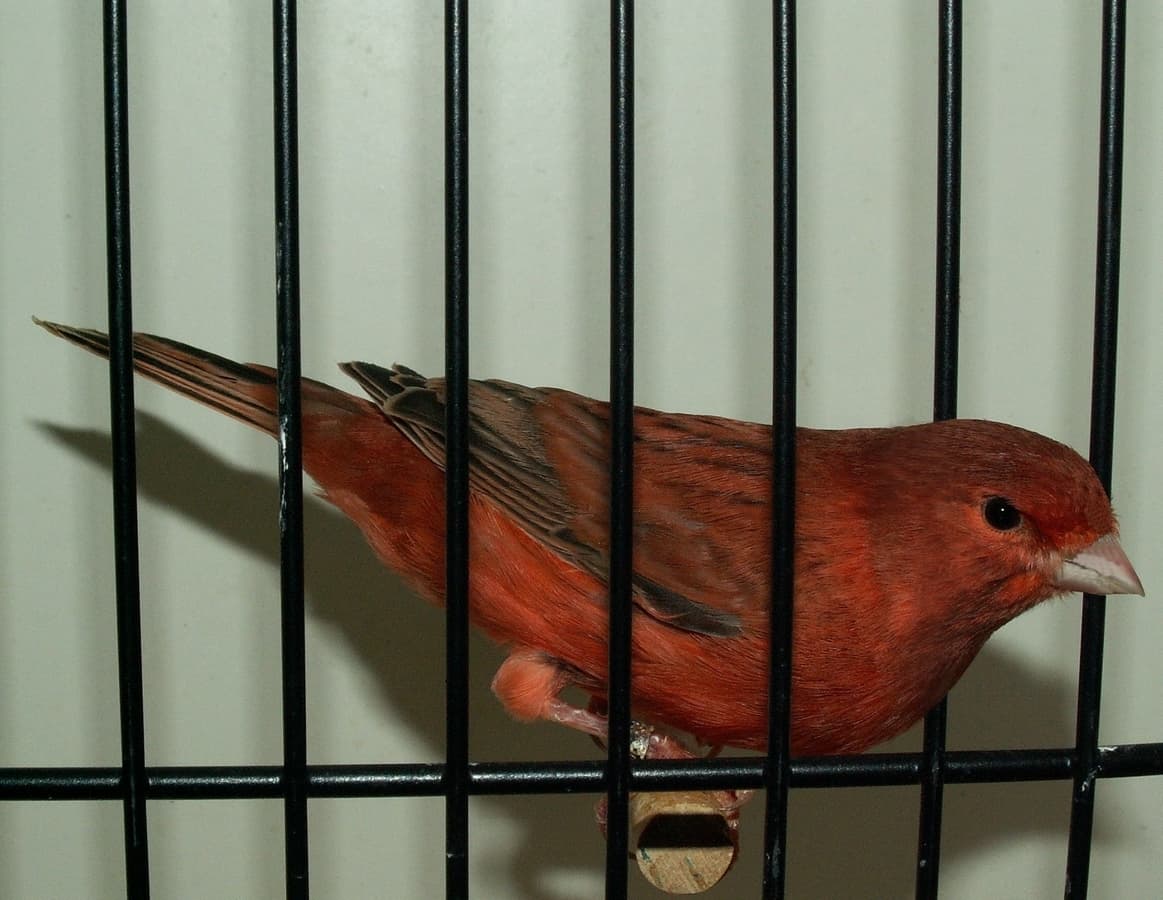
A standard canary shape, with plumage in shades of red, orange-red, orange or apricot. The exact look depends on feather type and diet.
Typical characteristics
- Bred for color, not shape or song
- Color depth affected by diet during the molt
- Feather type strongly affects appearance
Colors and feather types
| Term | Meaning |
|---|---|
| Intensive | Color reaches the tips of the feathers — brighter, more solid color |
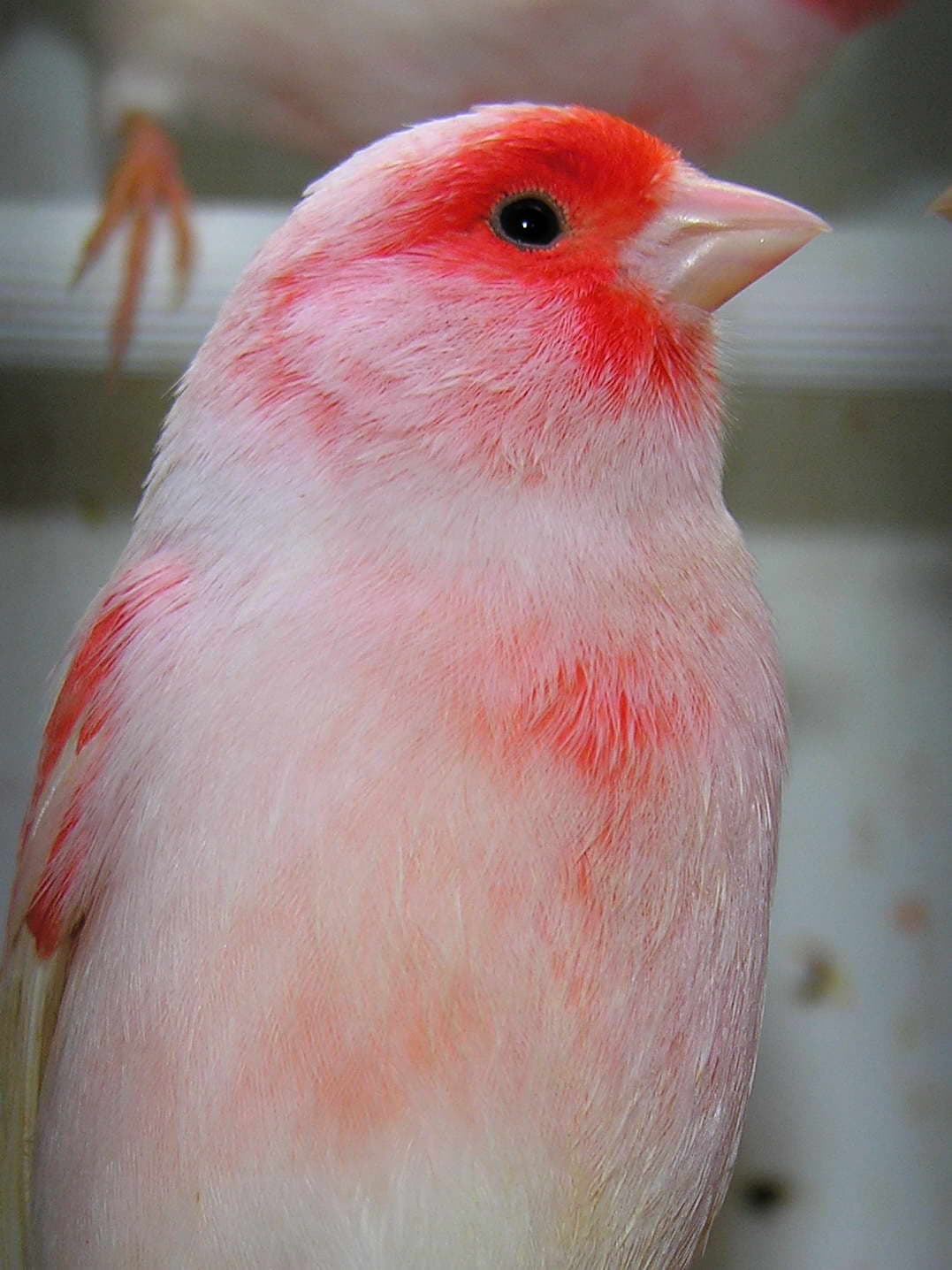
| Non-intensive (frosted) | Feather tips lack color, giving a "frosted" look |
| Mosaic | Color concentrated in specific areas (face, shoulders, rump); males and females differ |
| Red-ground melanins | Red factor birds that also carry dark melanin pigment (e.g. bronze, agate, isabel) |
Breeders commonly pair intensive with non-intensive birds to maintain good feather quality.
Song characteristics
Males sing a general canary song.
Temperament
Like most canaries — active, alert and easy to keep when settled.
Care considerations
Standard canary care, with attention to diet during the molt. See the complete canary care guide.
Cage considerations
Standard: a long cage with flight space. Some breeders keep birds out of strong direct sunlight, which is widely believed to fade red feathers over time.
Food considerations
- Standard canary diet all year: see what do canaries eat.
- Color feeding during the molt: breeders use color-feeding products made for canaries, or carotenoid-rich foods, while new feathers grow. Follow product instructions exactly.
- Start before the molt begins and continue until it is complete.
See feeding a canary during molting.
Breeding considerations
- Pair by feather type (often intensive × non-intensive).
- Many breeders continue appropriate color feeding for chicks while their first feathers grow.
- See the complete canary breeding guide.
Beginner suitability
Suitable. The bird is easy to keep; the only extra skill is managing color feeding if you want to maintain deep red color.
Differences from similar varieties
| Compared with | Main difference |
|---|---|
| Yellow and white color canaries | Lack the red-factor ability to deposit red pigments |
| Stafford canary | A type breed in red-ground colors with a Gloster-like shape |
| Lizard canary | Bred for pattern (spangles and cap), not red color |
Related varieties
Image gallery
Frequently asked questions
Why is my red factor canary turning orange?
Red factor canaries need suitable pigments (carotenoids) in the diet while their feathers grow during the molt. Without color feeding, new feathers come in paler — often orange or apricot. The color of existing feathers does not change until the next molt.
Is color feeding safe?
Color-feeding products made for canaries are widely used by breeders. Use products designed for birds, follow the instructions exactly, and do not exceed recommended amounts. If in doubt, ask an avian vet.
Do red factor canaries sing?
Yes. Males sing a general canary song, although they are bred for color, not song.
Sources and further reading
- Red factor canary — Wikipedia
- Domestic canary — Wikipedia
This guide shares general husbandry information and practical keeping experience. It is not veterinary advice. If your canary seems unwell, contact an avian veterinarian. Spotted an error? Report a correction.
Related guides
Feeding a Canary During Molting
How to feed a molting canary — more protein with egg food, extra greens, seed and pellets, calcium, and what to know about color feeding for red factor canaries.
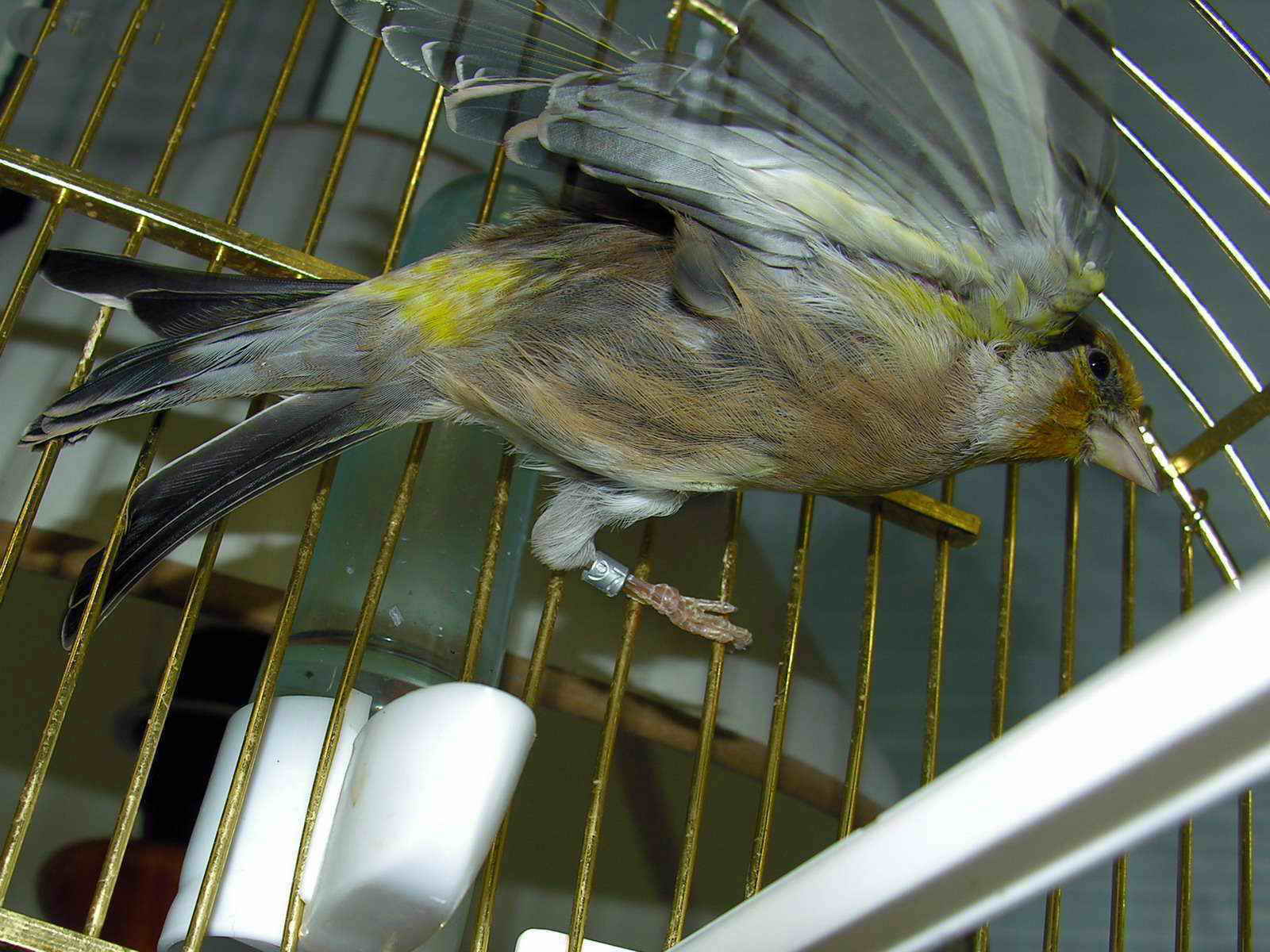
Complete Canary Molting Guide
Canary molting explained: when it happens, how long it lasts, normal feather loss, juvenile and soft molts, why song stops, and how to help your bird.
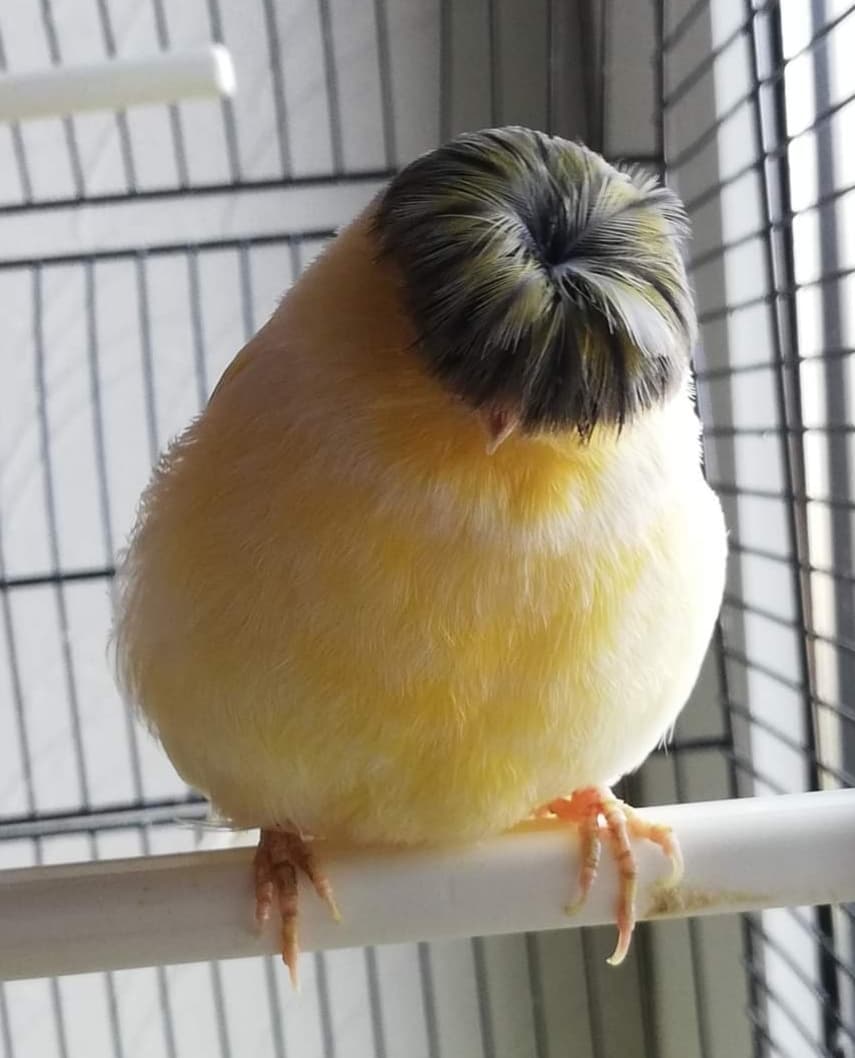
Gloster Canary
Gloster canary guide: origin, Corona and Consort forms, appearance, colors, temperament, care, breeding rules for crested birds and beginner suitability.
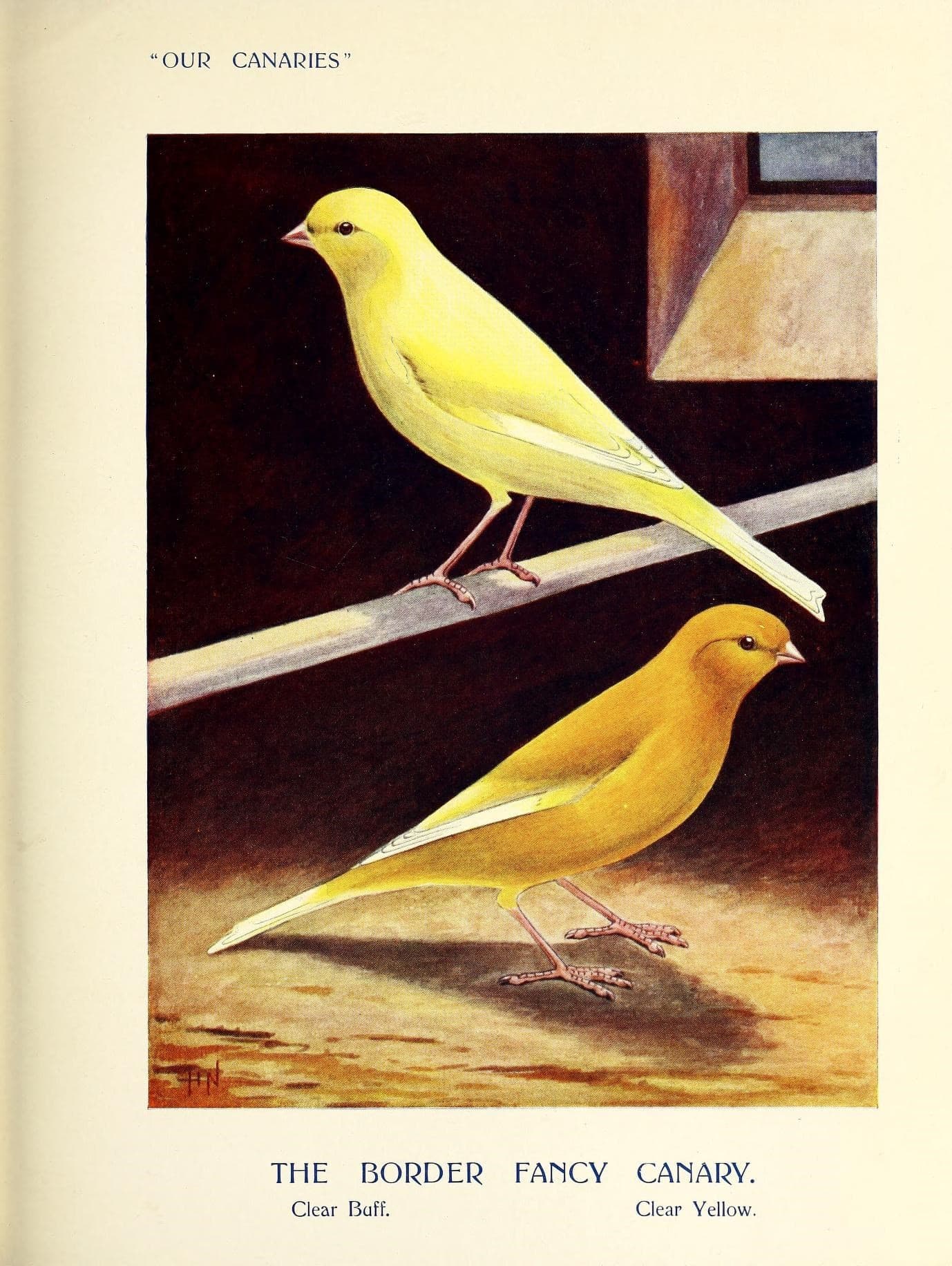
Border Canary
A guide to the Border canary (Border Fancy): Anglo-Scottish origin, appearance, colors, temperament, care, breeding and how it differs from the Fife and Gloster.