Canary Chick Care — From Hatching to Independence
A practical guide to canary chick care — what parents feed baby canaries, what to provide, nest checks, ringing, fledging, weaning and common chick problems.
In this guide
Quick answer Canary parents do almost all of the work. Give them fresh egg food at least once and ideally twice a day, plenty of greens, soaked or sprouted seed, calcium and clean water; keep the room calm; and check the chicks briefly once a day to make sure their crops are full. Chicks usually leave the nest at around 16–21 days and are weaned by about 4–5 weeks.
The first days after hatching
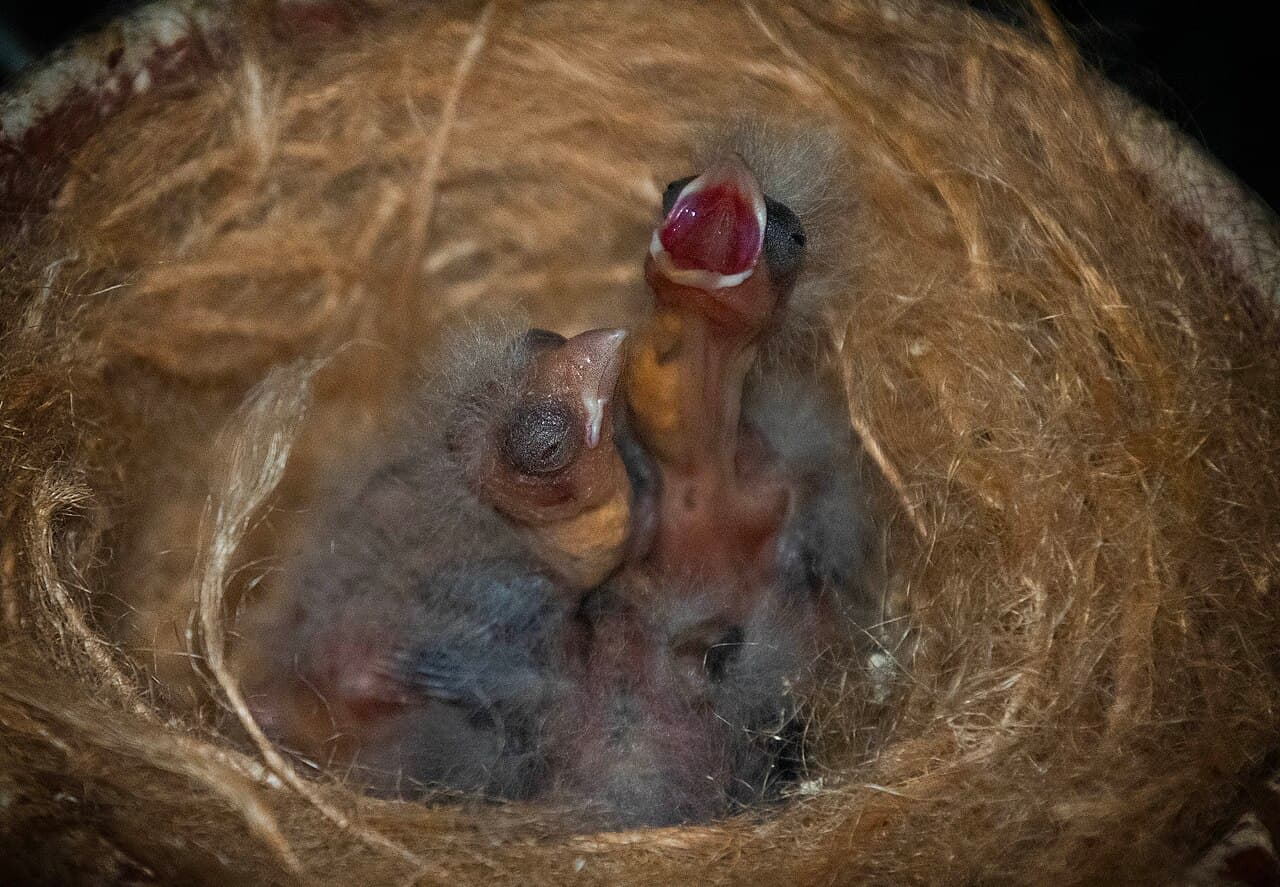
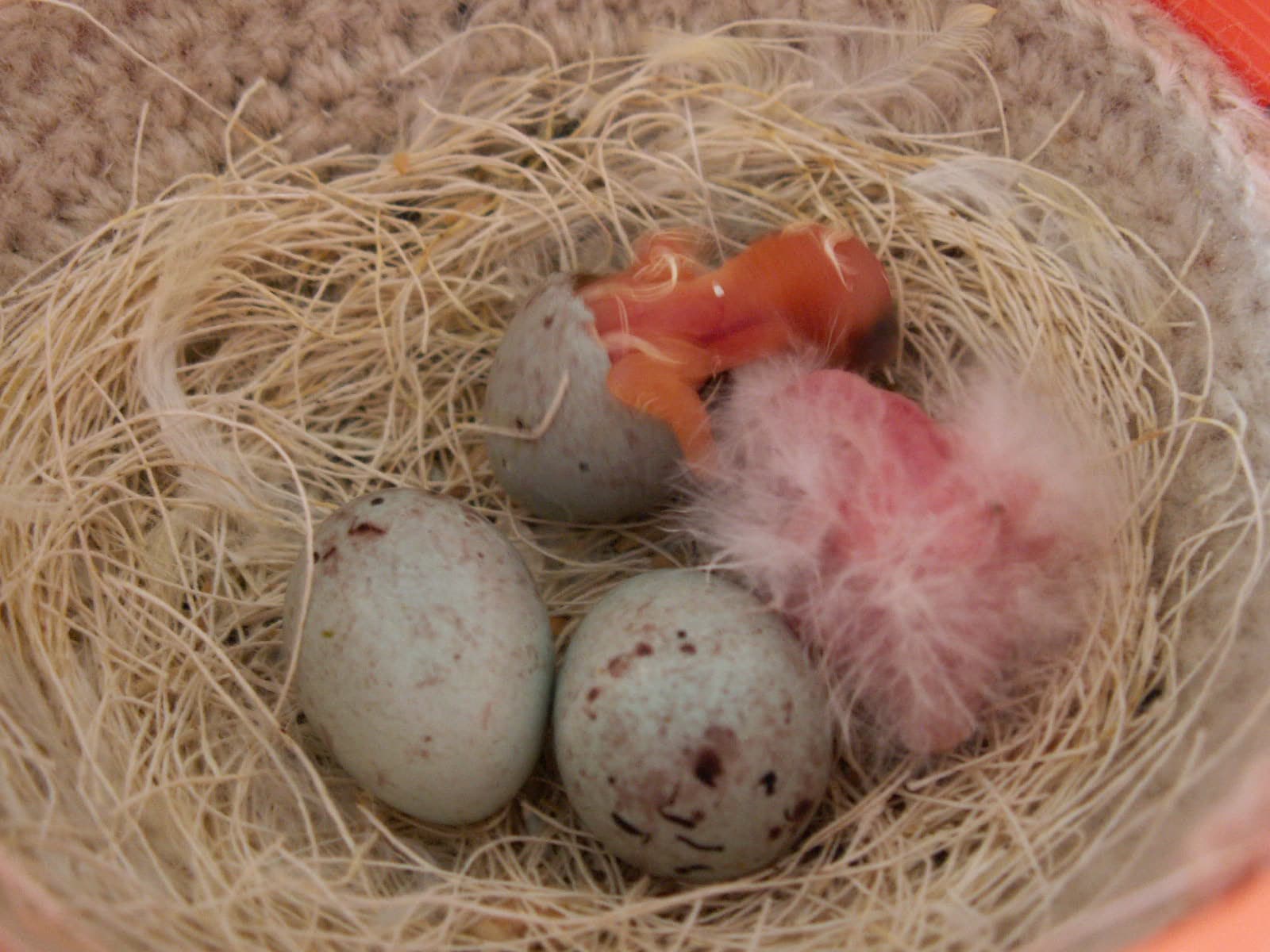
- Chicks hatch blind, with sparse gray down, and are completely dependent on the parents.
- The hen broods them constantly to keep them warm.
- Parents feed them by regurgitation, starting within hours of hatching.
What to provide for the parents
| Food | How often | Why |
|---|---|---|
| Egg food | At least once a day, ideally twice | Main protein source for chick-rearing |
| Soaked or sprouted seed | Daily | Soft, easy for parents to feed |
| Fresh greens | Daily | Vitamins and moisture |
| Seed mix | Always available | Base food |
| Cuttlebone | Always available | Calcium |
| Fresh water | At least daily | Parents drink much more while feeding |
Tip Make egg food fresh, offer it in the morning and again in the afternoon, and remove leftovers before it spoils.
Daily nest check
Once a day, when the hen leaves the nest briefly:
- Count the chicks.
- Look at the crops — a full crop shows as a visible, rounded swelling at the base of the neck.
- Check the nest is clean and dry.
Keep it short. Frequent disturbance can make some hens abandon the nest.
Ringing (close-banding)
Breeders who need permanent identification fit a closed ring to each chick's leg, usually at around 5–7 days old, while the foot is still small enough. Ringing is required in some countries for showing or selling birds — check local rules and the requirements of your club.
Fledging and weaning
- Leaving the nest: around 16–21 days. See when do canary chicks leave the nest.
- Weaning: around 4–5 weeks. See canary chick weaning.
Common chick problems
| Problem | What to consider |
|---|---|
| Empty crops / parents not feeding | Fresh egg food, calm, check the hen's condition; fostering; contact an experienced breeder or vet quickly |
| Chick thrown out of the nest | Return it if warm and alive; watch closely; this can repeat |
| One chick much smaller | Often the last to hatch; dummy eggs at the next round help |
| Chicks not growing well | Diet, parents' condition; seek advice early |
| Hen starts a new nest early | Common; provide a second nest pan so she does not build on top of the chicks |
Chick development
See canary chick development week by week for what to expect at each stage.
Frequently asked questions
What do baby canaries eat?
Baby canaries are fed by their parents, who regurgitate a mixture of softened seed, egg food and greens. Your job is to give the parents plenty of fresh egg food, greens and soaked or sprouted seed.
Should I touch canary chicks?
Handle chicks as little as possible. Brief, gentle handling for ringing or a necessary check is usually tolerated, but frequent nest inspections can disturb the parents.
Can I hand-feed canary chicks?
Hand-feeding canary chicks is difficult, time-consuming and risky, especially for very young chicks. It is a last resort. Fostering to another feeding hen, or advice from an experienced breeder or avian vet, is usually a better first step.
This guide shares general husbandry information and practical keeping experience. It is not veterinary advice. If your canary seems unwell, contact an avian veterinarian. Spotted an error? Report a correction.
Related guides
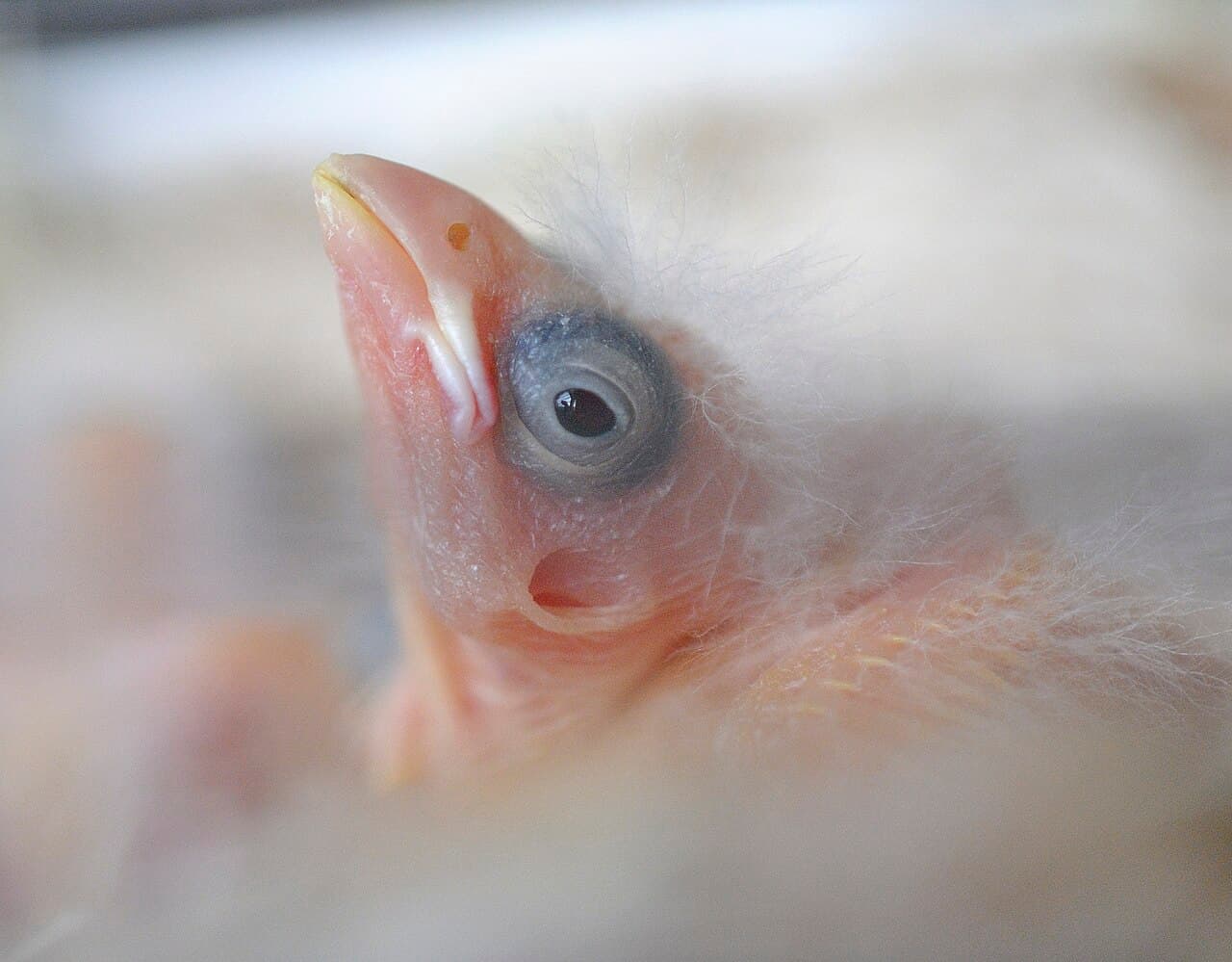
Canary Chick Development Week by Week
Canary chick development by age: hatching, eyes opening, pin feathers, fledging, first independent feeding and the juvenile molt, with approximate timings.
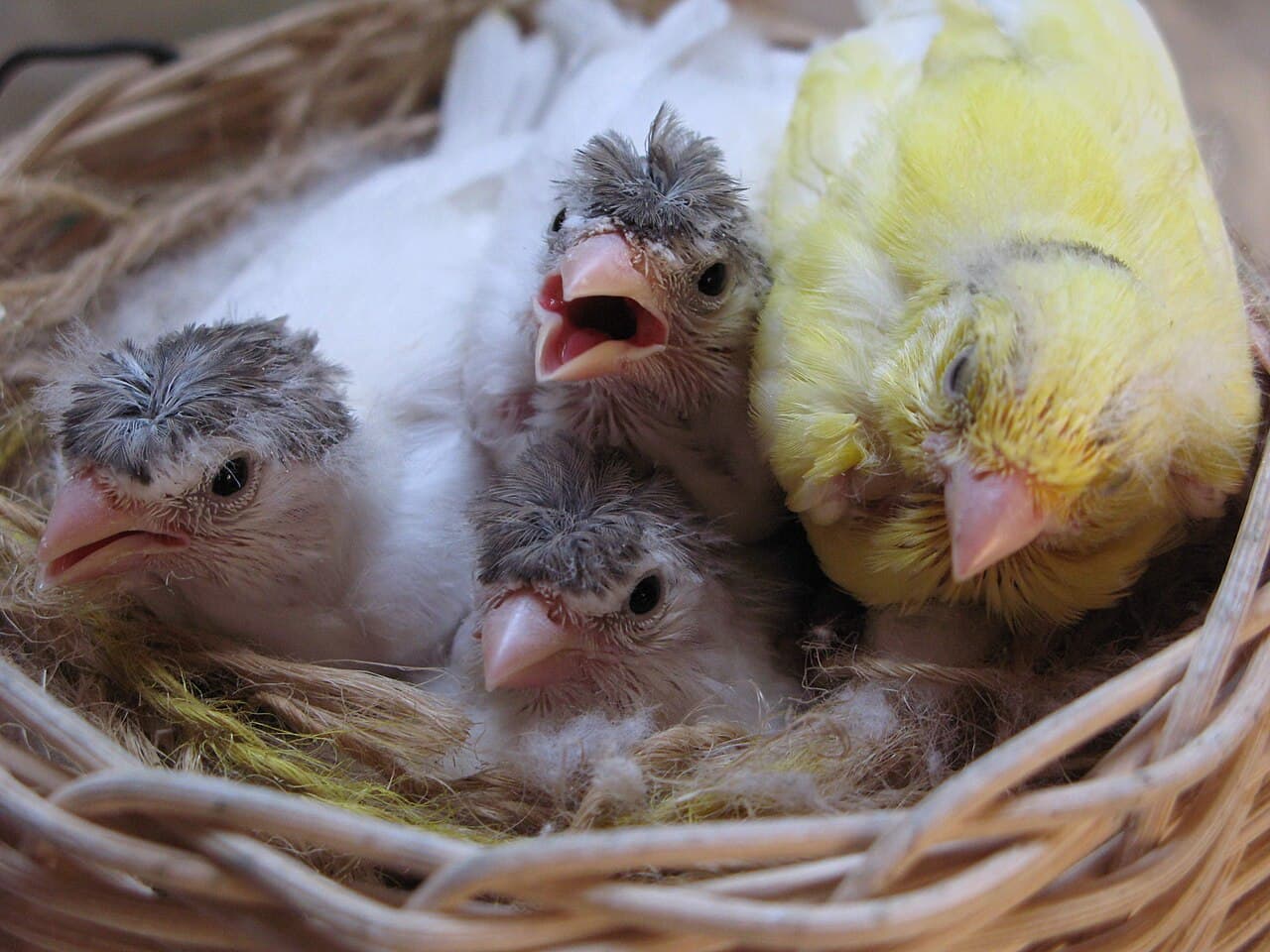
When Do Canary Chicks Leave the Nest?
Canary chicks usually leave the nest at around 16–21 days. What fledging looks like, how to prepare the cage, and what to do if chicks leave early or late.
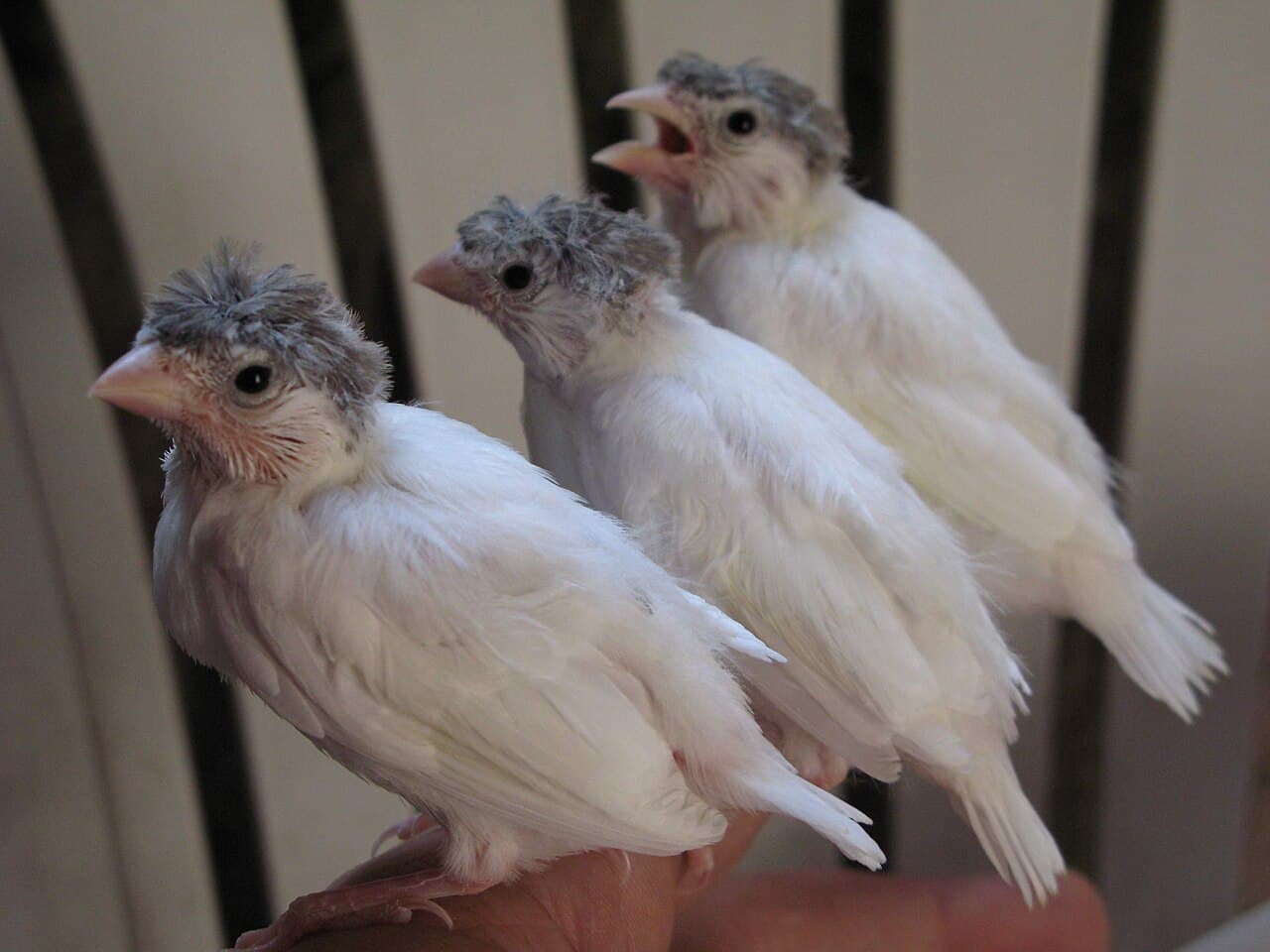
Canary Chick Weaning
How to wean young canaries: signs they are ready, when to separate them from the parents, the weaning cage, diet and what to watch in the first weeks.
Canary Eggs and Incubation
Everything about canary eggs — how many eggs canaries lay, laying pattern, dummy eggs, how long incubation takes, candling, hatching and common egg problems.